1/08/2016

WHAT DEEP LEARNING IS

Finally, I've got what Deep Learning is. (I mean, my main goal is to understand what Artificial Intelligence is and how to apply it to real life problem, and DL is just a branch of it).

Few days ago Bloomberg's Ashlee Vance wrote about George Hotz who hacked his car and taught how to drive by itself.

"In the month before our first drive on I­280, Hotz spent most of his time outfitting the sedan with the sensors, computing equipment, and electronics. Once all the systems were up and running, he drove the vehicle for two and a
half hours and simply let the computer observe him. Back in his garage, he downloaded the data from the drive and set algorithms to work analyzing how he handled various situations. The car learned that Hotz tends to stay in the middle of a lane and maintain a safe distance from the car in front of him. Once the analysis was complete, the software could predict the safest path for the vehicle. By the time he and I hit the road, the car behaved much like a teenager who’d spent only a couple of hours behind the wheel."

Inside George Hotz’s Acura ILX
Inside the car. Credit Peter Bohler for Bloomberg Businessweek


So Deep Learnig happens when you give a machine or a computer the intellectual tools to learn a task and than let it teach itself how to do it. It is like a children learning how to walk, talk etc. The Hotz's experiment is amazing.

At the beginning the car was unsecure and unstable. Then it learnt how to follow road lines, and be more careful when a cyclist was riding.

What amaze me is the capability of a computer to learn without putting specific rules of behavior inside. Hotz's software is made of 2,000 lines of codes. (A book-sharing app I had in mind requires around 500,000 lines). He says that if/then statements - the rules the computer will follow when he encounters that certain situation - are imprecise and unreliable. In this way the car can learn a personalized way of driving, based on the single driver teaching and experience.

Go forward George!

(Now, my question is: How can we use the Deep Learning technology to automate a mechanical, repetitive task? Proposals welcome)

12/30/2015

LOGIC AND THE SCIENCE OF PREDICTING THE FUTURE


Few days ago I was sewing my sweater to cover two holes in the elbow of the sleeves with a patch. To do such thing you have to put one hand inside the sleeve and to sew without looking the needle, but only “feeling” it with your fingers. Since you cannot see it, you have to calculate and to guess where it will get out of the woven. I call it a type of prediction.
 
The patch on the sleeve of my sweater. Can you easily calculate where the needle will come out?

What is logic? I think as something as “logical” when it follows a rule of cause-effect and it is a way to demonstrate or discover something true. Logic is the way to seek the truth and understand the reality of things. As Aristotle says, analytical – or logical – reasoning is demonstrative and impersonal. The reasoning is a scientific evidence to prove the truth, which is unchangeable no matter who is the listener.

My question is: If I apply all rules of logic, can I predict the future? Can I predict how the day of tomorrow will unfold? Can I predict elections' outcome? Can I predict the stock market performance? Fundamentally, I think it is possible – at least to some point.

Of course no prudent man will ever guarantee the future, neither a portfolio manager will declare how much his investment fund will perform in one year time. The law requires all financial institutions to say ahead of a investment that “past performance is not indicative of future results”. We can all agree on that. It is a fact of life that the future is unknown and we all accept that. We can only rely on one person's claim that a fact in the future will happen as long as he has control and power over its happening. We all trust our partner's promise that she will bake a cake for our birthday party or a student will graduate next session. They all have enough power over their situation to make it possible. But what happen when we have no control over the outcome? Can we predict it?

Ideally I believe it is possible. I agree with the quant hedge fund funder Jim Simons when he says that “past performance is indicative of future results”. The issue is not whether we have control over the outcome, but if we know all variables that determine the structure of the question. It is the knowledge or the ability to predict where the needle will get out of the patch without being able to see it. We can predict how the day of tomorrow will unfold if we know what all people will do, who will encounter who and what, how they will respond to their interrelation, what will be the weather, their boss' requests, their partner reaction. If we know all people habits, how they respond to change, requests and challenge, I believe it is possible to build a reliable model of the future. (On the idea that life is nothing but a bunch of habit, read C. Duhigg, The Power Of Habits, ch. 1 and 7).

One useful and money-making field where to build a model of the future is the financial investments. What determines the value of a stock? I will work on that on the following days. (Ehi, I have control over that, so I can predict it!).

UPDATE. Hey, I wrote Inquiry over Logic of Investments. Any idea?

12/17/2015

STRATEGY: HOW TO ACHIEVE YOUR GOALS

Last week I came across an article on Edward Luttwak's life and thinking. He is a septuagenarian resident of a suburb of Washington DC, living a ordinary retired age life, and earning his living by giving advices to governments about strategy, military actions and all other kinds of group conflicts - including marital disputes.

His competitive advantages are the huge knowledge of human flaws ("Most people cannot master their emotions"), historic facts and understanding of conflicting interests, the feeling that he is in connection with a deeper and hidden sense of reality and a counter-intuitive approach to strategy ("I never gave George Bush enough credit for what he’s done in the Middle East. He
ignited a religious war between Shi’ites and Sunnis that will occupy
the region for the next 1,000 years").


WHAT IS STRATEGY?

This made me thinking about what is Strategy. Big W defines it as the "high level plan to achieve one or more goals under conditions of uncertainty". Von Clausewitz, a 18th century Prussian military thinker, says it is "the combination of individual engagements to attain the goal of the campaign or war" (Principles of war). According to Von Clausewitz, the main purposes of war are to conquer and destroy the armed power of the enemy and to gain public opinion. So destruction of other's power and recognition of it are the goals of war.

I agree with that, but I think the ultimate goal, or aim, of strategy is to gain power. Strategy is strictly related to war and military actions, but the art to achieve goals encompass all areas of life, from to get a degree, to conquer a girl's heart, to build a business, to start a polar expedition. Nonetheless there are two areas where strategy is better studied and applied: military and business. Here the means to measure success - the achievement of goals - are visible and palpable: the capture of a city and the return of investment.

A BUSINESS STRATEGIST

On this second field I found a very interesting piece of advice by a hedge fund manager, Ray Dalio. He founded Bridgewater Associates to provide investment advices over securities and government bonds and now manage over 150B dollars. He designed the firm around the principle of seeking truth without regard to position or authority, but based only on soundness of reasoning and merit.

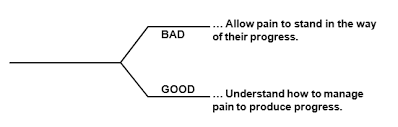
The reason I introduced Dalio is to reproduce the "Process to Getting What You Want Out of Life". In other words is Strategy applied to real life. He says that "failure is by and large due to not accepting and successfully dealing with the realities of life, and that achieving success is simply a matter of accepting and successfully dealing with all my realities" and that without facing pain and reflecting upon it a person cannot evolve to fulfil his potential. We are all faced virtually every moment with choices to make: whether or not to study, progress, make our job done, pursue goals, girls, lay down on the couch, investigate, fight or run, win or accept defeat, step back or push back.
https://encrypted-tbn2.gstatic.com/images?q=tbn:ANd9GcT5cRssT-46gA1Ia-V8zWRu_GCcXs5xM9KLrfBNqRczY9KdCGgtIQ
The choice we face every moment to be blocked by pain or to endure through it and progress (c. Ray Dalio, Principles)

THE PLAN

1) Set Your Goals.
You can have virtually anything you want, but you can’t have everything you want, so you have to make a decision about what you want to achieve and to kill what you would like to have but is not really meaningful or important to you.
Avoid setting goals based on what you think you can achieve.

2) Identifying and Not Tolerating Problems.
Most problems are potential improvements screaming at you.
Be very precise in specifying your problems.
Once you identify your problems, you must not tolerate them.

3) Diagnosing the Problems
You will be much more effective if you focus on diagnosis and design rather than jumping to solutions.
You must get at the root causes.
More than anything else, what differentiates people who live up to their potential from those who don’t is a willingness to look at themselves and others objectively.

4) Designing the Plan (Determining the Solutions)
Creating a design is like writing a movie script in that you visualize who will do what through time in order to achieve the goal.

5) Doing the Tasks
What is needed here is good work habits, self-discipline, being proactive and result-oriented.

In order to complete all these 5 steps different qualities are needed. To set goals requires high-level thinking and personal honesty, to identify problems needs perception and intolerance of badness, to diagnose needs hyper-logic, to design plan needs creativity, to do the task needs self-discipline. All these task can be completed by different people with various qualities.

This was Ray Dalio Plan to Achieve Goals in Life. This is what I think is Strategy.

"I believe that you can probably get what you want out of life if you can suspend your ego and take a no-excuses approach to achieving your goals with open-mindedness, determination, and courage, especially if you rely on the help of people who are strong in areas that you are weak." (Ray Dalio)

12/10/2015

INVESTING AND THE FUTURE

What is investing?

The Bible tell us a great story of what is investing in Matthew 25. Three servants are given 5, 2 and 1 talent respectively by their master, who is leaving for a certain period of time. Soon after he left, the first two servants start to put their money to work and they gain their capital back - a 100% return! The third servant, instead, digs a hole in the ground and buries his talent. We all know the ending: when the master went back he praised the two faithful servants and award them more things, but he scolded the third one, calling him lazy.

https://www.lds.org/bc/content/shared/content/images/gospel-library/manual/36618/36618_all_048_01.jpg

I believe investing is putting hard work, time, dedication, focus and energy to build something that will have value in the future. So if a man wants to invest in something he has to be willing to work hard and to trust in the future. He cannot be like the unfaithful servant, who was lazy - unwilling to work hard - and fearful - unwilling to put trust in the future.

I want to be a faithful servant.


12/03/2015

WHISTLE-BLOWING: THE INNER CONFLICT BETWEEN LOYALTY AND JUSTICE

So, who is a whistle-blower? According to Wikipedia is "a person who exposes any kind of information or activity that is deemed illegal, dishonest, or not correct within an organization that is either private or public". Usually he has an information about something wrong, uncorrect or unfair going on inside the company, public agency or national government he works in.

The most famous case is the one of Edward Snowden. He was a cyber analyst for one US Intelligence agencies, the National Security Agency, and he exposed questionable investigation and cyber intelligence gathering systems performed by NSA and other intelligence agencies around the world. He did so in order to give the public opinion the chance to determine whether this system of surveillance is acceptable or not.

Another type of whistle-blowing may occur in the private sector. An employee or a business partner may denounce a commercial malpractice, potential damages to public health or the environment, tax evasion, financial fraud, gender discrimination, sexual harassment and so on.

Governments and agencies even push for more whistle-blowing offering financial reward for people who provide useful informations.

http://wp.patheos.com.s3.amazonaws.com/blogs/nakedpastor/files/2013/01/whistle-blowers-590x590.jpg

I was thinking about what motivates employees to do so. In other words, there must be a inner conflict between loyalty to his employer, government, neighbour and something else, like lawful, integrity, compliance, a sense of rightfulness. All these aims try to protect equal distribution of taxes, privacy, the right to be alone, fairness in business, trust in public institutions, safety of water, air and manufactured products, public assets, national security, freedom of choice. I think all these can be summarized as Justice.

We know there is right and wrong. We have a inner sense of Justice. And when we see something wrong, unfair, incorrect, unlawful, unjust we all have a duty to respond to it. It is up to the employee, agent or contractor to evaluate where his duty of loyalty terminate and his sense of justice prevail.

So, yes, I think people, citizens and employees have a duty of loyalty and fidelity to their Country and their employer, but there is a higher duty of justice above it. That is the final seal of freedom.

11/26/2015

WHAT WILL LOOK LIKE BANK INDUSTRY IN THE FUTURE?

Few days ago the former CEO of Barclay's, one of the largest bank in the UK, said that the fate of today bank industry is already written. The technology will very likely disrupt the way banks make profits (lending, wealth management, payments) as more and more financial technology startups will arise.


One main reason of the proliferation on fin.tech is the relative low cost to set up a software startup. A report by CB Insight estimates it can be as low as $ 5,000.
Customers want to spend less for services they see mundane and with little cost, like payments. On the other hand they want highly sophisticated financial advises, but they are better informed about the choices on the market.

Today traditional banks, either national or global ones, offer a vast array of financial services, from mortgage to personal insurance and credit default swaps. Startups are trying to offer the same services for less than a bank can do.

The real difference right now lies in the reputation and customer base big banks and fintech have. Once customers will learn about cheaper and easier bank operators, a Uber-style revolution will unfold.

11/20/2015

WILL LAWYERS BE REPLACED BY COMPUTERS?

I already knew Richard Susskind, a lawyer and technology thinker on future change on legal profession, so I wasn't surprised to find an article on The Times of Israel.

He basically argues that the legal profession is going to face a technological change in the next future thank to improved capability by computers to process legal issues and deliver advices. After all, giving advices is what law firm are about, isn't it?

The fact is how we need to come to such landscape? Is computer-generated-advices an inevitable future?

Humans and computers will beat a human or a computer.

Surely there is a trend to more and more processes become streamlined. Every time an act is been performed and repeated, the intelligent lawyer can design a set of rules and procedures to make it a "commodity" process. That trend lead to a competition at the bottom of the law profession pyramid, where mundane tasks can be delegated to outsourced firm or - that's Susskind's point - to computer programs.

Another way law is going through change is in the structure of law firms. It has long been stated that firms cannot raise money from the public. The subdued principle is that the subsequent duty to shareholders could be in conflict with lawyer's primary duty of loyalty to clients. But, now even this barrier has been overcome, having Australia allowed since 2007 law firms to be listed in the stock market.

I think the legal profession will keep to have a strong link to reputation, knowledgeable and trusted professionals. I don't think giving non-lawyers financial stakes can improve quality and efficiency. It might increase the chance of ethical conflicts and distress.

On the other hand, I believe technological improvement can arise for legal professions. Software that can read documents and find legal flaws, algorithm to design a strategy or a array of them, research tools. I am eager to see what will come.